


Generic Semaglutide
Syllabus: GS2/ Health; GS3/ Science & Technology
Context
- The entry of generic versions of Semaglutide in India has reduced prices significantly, improving affordability for patients with Type 2 Diabetes and obesity.
About Semaglutide
- Semaglutide is a GLP-1 (glucagon-like peptide-1) receptor agonist used for;
- Glycaemic control in diabetes.
- Weight management in obese patients.
- It works by enhancing insulin secretion and reducing appetite and slowing gastric emptying.
- It is often described as a weight-loss breakthrough drug, leading to rising demand beyond clinical indications.
What are Generic Medicines?
- A generic medicine is a medication created to be the same as an already marketed brand-name drug in dosage form, safety, strength, route of administration, quality, and performance characteristics.
- It contains the same active ingredient as the brand-name version and works in the body the same way to provide the same clinical benefit.
Source: TH
Consumer Justice Report 2026
Syllabus: GS2/Governance; Government Policies & Interventions
Context
- Recently, the India Justice Report’s (IJR) released the ‘Consumer Justice Report 2026: Assessing Capacity of Redressal Commissions in India’.
About ‘Consumer Justice Report 2026’
- It is a first nationwide assessment of consumer dispute redressal system capacity under Consumer Protection Act, 2019.
- It evaluates states using indicators across budget, infrastructure, human resources, workload, and gender diversity etc.
Key Highlights of Report
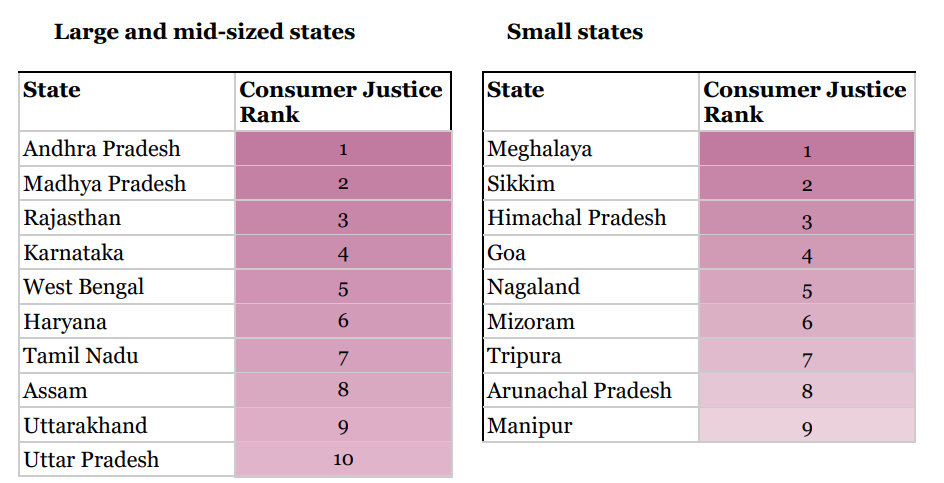
- Top Performing States: Andhra Pradesh (1st), followed by Madhya Pradesh, Rajasthan, Karnataka, West Bengal.
- It reflects institutional capacity, efficiency, and disposal rates in consumer dispute redressal systems.
- High Vacancies:
- State Commissions (SCDRCs): About 50% President posts vacant; and about 40% Member posts vacant.
- District Commissions (DCDRCs): About 32% President vacancies; and about 39% Member vacancies.
- Huge Pendency of Cases: About 35% cases pending for more than 3 years (violates 5-month disposal mandate);
- Poor Gender Representation: Only 2 states (Delhi & Sikkim) had women presidents; and only 3 SCDRCs had a woman president in the last 5 years.
- Sector-wise Complaints: Most complaints related to Insurance (25.1%); Housing (18.7%); and Banking (8.7%) in State Consumer Disputes Redressal Commission (SCDRCs).
- Housing dominates at national commission level (44%)
Consumer Redressal in India
- It is governed by the Consumer Protection Act, 2019 (replaced 1986 Act) with objectives to protect consumer rights, and provide simple, speedy & inexpensive redressal.
- Three-Tier System:
- District Commission (DCDRC): Deals with cases up to ₹1 crore (latest revised limits may apply); first point of complaint (original jurisdiction);
- State Commission (SCDRC): Appeals & higher-value cases;
- National Commission (NCDRC): Apex body (New Delhi);
- These are quasi-judicial bodies designed for speedy justice and accessibility.
Key Features of Consumer Protection Act, 2019
- Central Consumer Protection Authority (CCPA): It regulates unfair trade practices. It can recall products, impose penalties, and ban misleading ads.
- E-Filing System: e-Daakhil portal enables online complaint filing, fee payment, and case tracking.
- Mediation Mechanism: Consumer Mediation Cells attached to commissions; and promotes out-of-court settlement.
- Covers E-Commerce: Includes online platforms (Amazon, Flipkart, etc.); Rules for transparency, refunds, and grievance officers.
Anti-Dumping Probe Into Ethyl Chloroformate
Syllabus: GS2/Governance
Context
- Recently, India has initiated an anti-dumping investigation on imports of Ethyl Chloroformate from China, following allegations of unfair pricing harming domestic industry.
About Dumping & Anti-Dumping
- Dumping is exporting goods at a price lower than the normal value (domestic price or cost of production).
- Anti-dumping duty is a protectionist tariff imposed to counter unfair trade practices.
- It is governed by WTO’s Anti-Dumping Agreement and Customs Tariff Act, 1975 in India.
- WTO does not prohibit dumping, but allows countries to act if it causes material injury.
Additional Information
- Directorate General of Trade Remedies (DGTR) functions under the Department of Commerce, Ministry of Commerce & Industry.
- It acts as the ‘designated authority’ for implementing WTO-compliant trade remedies in India.
- It investigates whether dumping exists, and extent of injury to domestic industry.
- If proven, recommends anti-dumping duties to the government.
- Ethyl Chloroformate: Organic intermediate; Used in Pharmaceuticals; and Agrochemicals.
Convention on International Trade in Endangered Species of Wild Fauna and Flora (CITES)
Syllabus: GS3/Environment
Context
- Recently, the Supreme Court of India has dismissed a petition alleging violation of Convention on International Trade in Endangered Species of Wild Fauna and Flora (CITES) parameters.
About Convention on International Trade in Endangered Species (CITES)
- It is a legally binding agreement aimed at ensuring that international trade in wild animals and plants does not threaten their survival.
- It does not ban trade completely, but regulates it through a system of permits and classifications.
- Signed: 1973 (Washington Convention)
- Entered into force: 1975
- Administered by: UNEP (Secretariat in Geneva)
- Parties: 180+ countries; India is a member
- Nature: Binding on countries, but implementation via national laws;
- Institutional Structure: Conference of Parties (CoP): Highest decision-making body (meets every 2–3 years)
- Secretariat: Geneva
- Working of CITES: CITES regulates trade through permits & certificates system, scientific and management authorities in each country.
Three Appendices
- Appendix I: Species threatened with extinction; Trade allowed only in exceptional cases;
- Example: Tiger, Elephant (certain populations), Rhino
- Appendix II: Species not immediately threatened, but may become so; controlled trade allowed.
- Example: Many timber species, marine species (e.g., sharks)
- Appendix III: Species protected in at least one country; other countries help regulate trade.
India & CITES
- India is a signatory since 1976; Implemented via Wildlife Protection Act, 1972;
- Key Authorities: MoEFCC (Management Authority); Wildlife Institute of India (Scientific Authority).
Nilgiri Tahrs
Syllabus: GS3/Species in News
Context
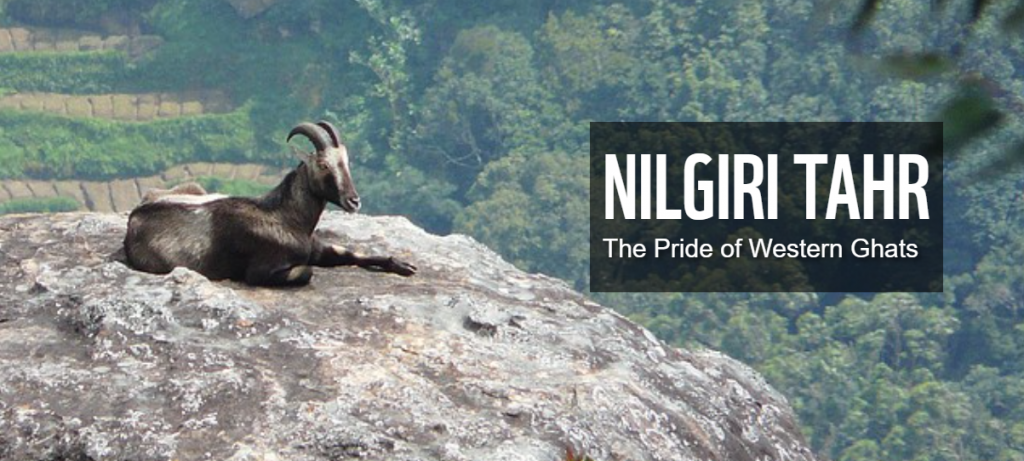
- The Chokramudi hills near Munnar in Idukki (Kerala) have now transformed into a thriving natural habitat for the Nilgiri tahr.
About Nilgiri Tahr
- Description: A stocky mountain goat (Nilgiritragus hylocrius) with short, yellowish-brown fur, and the state animal of Tamil Nadu.
- Habitat and Distribution: Endemic to a 400 km stretch of the Western Ghats, primarily across Kerala and Tamil Nadu.
- Diet: A herbivore feeding on over 120 species of grasses, herbs, and shrubs.
- Threats: Key threats include habitat loss (deforestation, plantations, hydroelectric projects), competition with domestic livestock, and hunting.
- Conservation Status: Listed as Endangered (IUCN Red List) and protected under Schedule I of the Wildlife Protection Act 1972.
Do you Know?
- The Nilgiri tahr is the state animal of Tamil Nadu, and Eravikulam National Park hosts the largest surviving population and highest density of the species.
Source: TH
Inquiry and Prosecution Wing of Lokpal
Syllabus: GS2/ Polity
In News
- A Parliamentary Standing Committee has sought details on the operationalisation of inquiry and prosecution wings provision in the Lokpal and Lokayukta Act 2013, highlighting delays even after a decade of enactment.
About Lokpal
- Status & Mandate: Statutory anti-corruption body (Lokpal and Lokayuktas Act, 2013). It became functional in 2019. Mandated to inquire into corruption allegations against public functionaries.
- Structure: Consists of a Chairperson (former CJI, former SC Judge, or eminent person) and eight Members (four Judicial). At least 50% of Members must be from SC/ST/OBC/Minorities/women.
- Appointment & Term: Appointed by the President based on the recommendation of a selection committee chaired by the Prime Minister. The term is 5 years or until 70 years of age.
- Jurisdiction: Covers current or former PM, Union Ministers, MPs, and Union Government officials (Groups A, B, C, D). Also includes heads and members of bodies funded by Union/State or receiving foreign contributions over ₹10 lakh.
- Powers: It has powers to superintendence over and to give direction to the CBI. Can refer complaints against Central government servants to the CVC.
- PM Exemptions: Cannot inquire into allegations against the PM regarding international relations, security, public order, atomic energy, or space. Initiation of a PM inquiry requires consideration by the full Lokpal bench and approval by at least 2/3rds of the members.
| Inquiry Wing | Prosecution Wing |
|---|---|
| – Section 11 of the Act mandates to constitute an inquiry wing (to be headed by a Director of Inquiry) for conducting a preliminary inquiry into corruption-related offences. – The Department-related Parliamentary Standing Committee on Personnel, Public Grievances, Law and Justice noted that the appointment of the director of inquiry and staffing of the inquiry wing is still in process. | – Section 12 of the Act obligates the Lokpal to constitute a Prosecution Wing (headed by a Director of Prosecution) for the purpose of prosecution of public servants in relation to any complaint by the Lokpal. – The Prosecution Wing was formally constituted in June 2025. – At present, prosecution functions are largely handled by the Central Bureau of Investigation (CBI). |
Source: TH
Previous article
Corporate Governance in India: From Compliance to Conscience
Next article
Delimitation Push to Fast-Track Women’s Reservation
